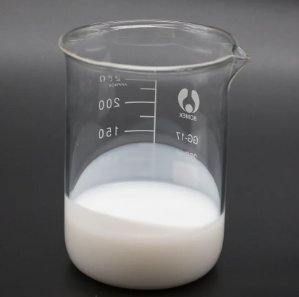

Introduction to Water-Based Zinc Stearate: Bridging Performance and Sustainability in Modern Manufacturing
Water-based zinc stearate is an environmentally friendly choice to solvent-based lubricants and launch agents, offering remarkable efficiency with very little ecological impact. As industries shift toward greener manufacturing techniques, this liquid dispersion of zinc stearate has gotten prominence throughout sectors such as rubber processing, steel forming, concrete casting, and polymer manufacturing. Its capability to provide reliable lubrication, prevent adhesion, and reduce surface problems makes it a flexible device in modern industrial applications. With growing governing pressure on unpredictable organic substance (VOC) discharges, water-based zinc stearate attracts attention as a tidy, effective, and scalable service.

(TRUNNANO Water Based Zinc Stearate)
Chemical Make-up and Practical System
Zinc stearate is a metal soap formed by the response of stearic acid with zinc oxide or zinc salts. In its water-based solution, it is usually distributed utilizing surfactants or emulsifiers to make certain security and uniform application. When related to surface areas, the zinc stearate particles develop a slim, hydrophobic movie that lowers rubbing and protects against direct get in touch with between materials. This system is essential in mold launch operations, where it facilitates easy demolding without harming the final product’s surface stability. Furthermore, its high melting factor (~ 120– 130 ° C) enables it to perform properly under modest thermal problems, keeping performance during high-temperature procedures.
Applications in Rubber and Polymer Processing
In rubber manufacturing, water-based zinc stearate offers twin functions– as a mold release agent and as an inner lubricating substance. It protects against sticking between uncured rubber compounds and mold and mildew surfaces, guaranteeing regular part top quality and reducing post-processing efforts. In thermoplastics and elastomers, it enhances circulation residential properties throughout extrusion and shot molding, decreasing pass away build-up and boosting surface finish. Its compatibility with numerous polymers, consisting of polyolefins, PVC, and design materials, additionally broadens its energy. In addition, its non-reactive nature guarantees it does not conflict with treating or vulcanization responses, maintaining product efficiency attributes.
Function in Steel Forming and Stamping Industries
The metalworking industry increasingly counts on water-based zinc stearate for cold and cozy developing operations. Utilized as a lubricant in marking, attracting, and forging, it forms a safety boundary layer that lowers device wear and boosts part surface area high quality. Contrasted to oil-based or wax coatings, it provides better heat dissipation and cleaner operation, which is especially helpful in automatic assembly line. In addition, its ease of elimination after processing– making use of straightforward water rinsing or moderate cleaning agents– lowers cleansing costs and prevents deposit buildup on ended up elements. This makes it suitable for use in automobile, aerospace, and accuracy element manufacturing.
Usage in Concrete and Building Materials
Within the construction industry, water-based zinc stearate is widely made use of as an interior launch representative for precast concrete components. Unlike conventional oil-based products, it does not tarnish surfaces or interfere with secondary therapies like painting or finish. When blended into concrete or related to formwork, it avoids bonding between the mold and the hardened concrete, enabling simple demolding while keeping dimensional precision. Its low thickness allows also protection via splashing or brushing, making it appropriate for both hands-on and mechanical procedures. In addition, it adds to longer mold life by shielding versus chemical strike and abrasion from duplicated spreading cycles.
Environmental and Security Advantages Over Conventional Alternatives
One of the most engaging benefits of water-based zinc stearate is its ecological account. Devoid of solvents, VOCs, and toxic additives, it aligns with international sustainability objectives and job-related wellness requirements. Workers take advantage of reduced direct exposure to combustible or unsafe materials, and makers can satisfy strict air quality regulations without extra ventilation systems. From a waste administration point of view, water-based formulations are easier to manage and take care of securely, sustaining circular economy techniques. These attributes make it a recommended option for companies intending to attain environment-friendly certifications such as ISO 14001 or LEED compliance.
Market Trends and Technological Innovations
( TRUNNANO Water Based Zinc Stearate )
The market for water-based zinc stearate is experiencing constant growth, driven by increasing need for environment-friendly commercial services and stricter ecological regulation. Suppliers are investing in innovative dispersion technologies to enhance stability, expand shelf life, and enhance efficiency under extreme conditions. Advancements such as nano-dispersed zinc stearate and hybrid formulas with silicone or PTFE are being explored to supply exceptional lubricity and temperature level resistance. Furthermore, clever distribution systems– consisting of atomized sprays and application devices integrated with IoT– are making it possible for accurate application control, reducing intake and operational prices.
Obstacles and Ongoing Study Directions
Despite its advantages, water-based zinc stearate faces particular constraints, consisting of level of sensitivity to water hardness, potential microbial destruction, and lower load-bearing ability contrasted to artificial lubricating substances. To resolve these problems, ongoing research focuses on maximizing emulsion stability, including biocides for microbial resistance, and enhancing useful efficiency with additive harmonies. Compatibility with various substrates and procedure problems also stays a key location of development. Initiatives are underway to tailor formulas for details applications, making sure regular efficiency across diverse industrial atmospheres.
Future Prospects: Assimilation with Smart Manufacturing and Environment-friendly Chemistry
Looking in advance, water-based zinc stearate is positioned to play a central duty in the shift toward smart and lasting production. Its combination with Industry 4.0 technologies– such as real-time monitoring, predictive maintenance, and automated giving– will certainly make it possible for much more effective and flexible production operations. Breakthroughs in bio-based surfactants and eco-friendly feedstocks will certainly even more enhance its environmental qualifications, supporting decarbonization techniques across supply chains. As sectors remain to prioritize resource effectiveness and environmental stewardship, water-based zinc stearate represents a calculated development that balances technological efficiency with ecological duty.
Provider
TRUNNANO is a supplier of water based zinc stearate with over 12 years of experience in nano-building energy conservation and nanotechnology development. It accepts payment via Credit Card, T/T, West Union and Paypal. Trunnano will ship the goods to customers overseas through FedEx, DHL, by air, or by sea. If you want to know more about zinc stearate uses in pvc, please feel free to contact us and send an inquiry(sales5@nanotrun.com).
Tags: water based zinc stearate, zinc stearate, zn stearate
All articles and pictures are from the Internet. If there are any copyright issues, please contact us in time to delete.
Inquiry us