Wednesday, July 29, 2026
Home Blog Page 45

BT151 500R: The perfect guide to use and maintenance

0

Overview of BT151-500R

A thyristor, or thyristor for short, is a high-power semiconductor device containing three PN junctions and four layers of semiconductor materials. It has a small size, relatively simple form, and solid functions and is one of the more commonly used semiconductor devices. This device is widely used in various electronic equipment and products and is often used for controllable rectification, inverter, frequency conversion, voltage regulation, contactless switch, etc. In household appliances, dimming lamps, speed-adjustable fans, air conditioners, televisions, refrigerators, washing machines, cameras, combination speakers, sound and light circuits, timing controllers, toy devices, radio remote controls, cameras, and industrial controls are widely used—silicon controlled device.


Features and advantages of BT151 500R

  1. High efficiency: BT151 500R, a field effect transistor (MOSFET), has exceptionally high switching speed and conduction capability. Its fast response and large flow capacity make it perform well in various high-frequency and high-power application scenarios.
  2. Low power consumption:Compared with similar products, BT151 500R has lower conduction internal resistance, effectively reducing energy consumption and allowing the device to maintain high efficiency and stability even under long-term operation.
  3. Rugged and durable:BT151 500R has high breakdown voltage and reverse withstand voltage and can maintain stable performance even in harsh environments, significantly improving the reliability and service life of the equipment.
  4. Easy to integrate:BT151 500R has a compact package size, which makes it easy to incorporate into various microdevices, making the design more flexible.


In the world of electronic components, BT151 500R has become the first choice of many engineers and researchers due to its high performance, low power consumption, ruggedness, and easy integration. But how to properly use and maintain the BT151 500R? This article will detail the use and maintenance skills of BT151 500R to help you better utilize its performance and extend its service life.


 Precautions when using BT151 500R:

  1. When selecting the rated voltage of the thyristor, you should refer to the peak voltage under actual working conditions and leave a certain margin.
  2. When selecting the rated current of the thyristor, in addition to considering the average current passing through the component, you should also pay attention to factors such as the size of the conduction angle during regular operation, heat dissipation, and ventilation conditions. During work, it should also be noted that the temperature of the tube shell does not exceed the allowable value under the corresponding current.
  3. Before using the thyristor, you should use a multimeter to check whether the thyristor is in good condition. If abnormal performance or damage to the BT151 500R is found, stop using it immediately and replace it. When replacing, make sure that the model and specifications of the field effect transistor (MOSFET) you return match the original device to ensure the regular operation of the equipment.
  4. It is strictly forbidden to use a megohmmeter (i.e., megger) to check the insulation condition of components.
  5. Since BT151 500R generates a lot of heat in high-frequency and high-power applications, good heat dissipation conditions are the key to ensuring its stable operation. Ensure that heat dissipation facilities such as heat sinks or cooling fans work correctly and dissipate heat promptly.
  6. Avoid placing the BT151 500R in harsh environments, such as high temperature, humidity, dust, etc., to avoid affecting its performance or causing damage.

Tips for maintaining BT151 500R

  1. Regular inspection:Regularly check the appearance, wiring terminals, and other parts of BT151 500R to ensure that they are not damaged or loose to ensure their regular operation.
  2. Cleaning and dust removal:Clean the surface of BT151 500R regularly to remove dust and dirt to maintain good heat dissipation. At the same time, clean the wiring terminals and other parts to prevent problems such as poor contact caused by dust accumulation.
  3. Preventive maintenance:For BT151 500R, which has not been used for a long time, its working status should be checked regularly to ensure its regular operation. At the same time, for BT151 500R, which works continuously for a long time, rest periods should be arranged appropriately to avoid damage caused by overheating.
  4. Replace components:If the performance of BT151 500R is found to be degraded or damaged, it should be replaced in time. When returning, field effect transistors (MOSFETs) of the same model and specification should be used to ensure the regular operation of the equipment. At the same time, during the replacement process, attention should be paid to operating specifications to avoid damage or other safety issues caused by improper operation.


As an excellent electronic component, BT151 500R is widely used in power electronics, automotive electronics, industrial control, and consumer electronics due to its high performance, low power consumption, ruggedness, and ease of integration. As technology continues to advance and market demand continues to grow, BT151 500R will continue to play its essential role.Proper use and maintenance of BT151 500R is the core to ensure smooth operation of the equipment and extend its service life.During use, procedures should be strictly carried out by the voltage and current ratings, maintain good heat dissipation conditions, and avoid the impact of extreme environments; during maintenance, regular inspections, cleaning and dust removal, preventive maintenance, and timely replacement of damaged components should be performed.


Supplier


PDDN Photoelectron Technology Co., Ltd. is a high-tech enterprise focusing on the manufacturing, R&D and sales of power semiconductor devices. Since its establishment, the company has been committed to providing high-quality, high-performance semiconductor products to customers worldwide to meet the needs of the evolving power electronics industry.

It accepts payment via Credit Card, T/T, West Union, and Paypal. PDDN will ship the goods to customers overseas through FedEx, DHL, by sea, or by air. If you are looking for high-quality BT151 500R, please feel free to send us inquiries and we will be here to help you.

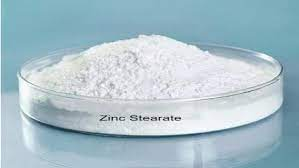
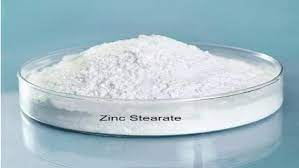
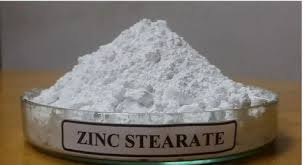
Zinc stearate: innovative additives lead a new chapter in materials science

The function of zinc stearate is to inhibit the thermal degradation reaction of PVC at high temperatures and reduce the generation of harmful gases, thereby improving the thermal stability of PVC.

PVC (polyvinyl chloride) is a plastic material widely used in the preparation of plastic products. It has excellent chemical resistance, weather resistance and mechanical properties. It is widely used in various fields such as construction, medical, electronics, and automobile industries.

However, the thermal stability of PVC at high temperatures has always been a problem. With people’s increasing requirements for sustainability and environmental protection, improving the thermal stability of PVC has become particularly important. In order to improve the thermal stability of PVC, zinc stearate, as a common heat stabilizer, is widely used in the preparation process of PVC.

Although zinc stearate has been used in the plastics industry for decades, there are still many issues that require in-depth study regarding its synthesis methods and performance effects.

There are various methods for synthesizing zinc stearate, which can be divided into traditional methods and new methods according to different synthesis routes. The traditional synthesis method involves the reaction of stearic acid and zinc oxide, mainly including esterification reaction, hydrolysis and dehydration reaction.

The advantage of traditional synthesis methods is that the synthesis process is relatively simple, but there are shortcomings, such as the generation of many by-products, low reaction yield, and poor environmental friendliness. In recent years, catalytic synthesis methods have become a new research hotspot, which usually uses organic catalysts or metal catalysts to achieve efficient reactions between stearic acid and zinc oxide.

The principle step of the c

atalytic synthesis method is to select an appropriate catalyst. Common organic catalysts include carbonates, alcohols, amines, etc., and metal catalysts such as zinc chloride (ZnCl2) and methyltin compounds have also been widely studied for this purpose. reaction. The presence of the catalyst promotes the esterification reaction between zinc oxide and stearic acid to form an intermediate product of zinc stearate.

The intermediate product then undergoes hydrolysis and dehydration reactions to produce the final zinc stearate. Finally, the zinc stearate product needs to undergo appropriate separation and purification steps to remove unreacted materials and impurities.

The catalytic synthesis mechanism of zinc stearate includes the action mechanism of the catalyst and the reaction mechanism.

Catalysts play an important role in the synthesis of zinc stearate, reducing the activation energy of the reaction and accelerating the reaction rate.

The catalyst may promote the esterification reaction of stearic acid and zinc oxide by providing nucleophilic sites and may also provide protons or hydroxide ions to promote the hydrolysis reaction of the ester. The reaction mechanism of the entire catalytic synthesis involves multiple steps, including esterification, hydrolysis, and dehydration.

In the experiment, first mix stearic acid and absolute ethanol in a dry glass reaction bottle and stir evenly until the stearic acid is completely dissolved. Subsequently, the catalyst is gradually added and stirring is continued.

Place the reaction bottle into a constant temperature bath and control the temperature to perform the reaction within a specific range.

After the reaction is completed, the reaction liquid is filtered, purified and dried to obtain the final zinc stearate product.

The synthesis method and condition selection of zinc stearate will directly affect the properties and yield of the product. Zinc chloride was used as a catalyst in the experiment, and the appropriate reaction temperature and time were controlled.

The synthesized zinc stearate has been analyzed and tested and has a typical waxy structure and good thermal stability. In summary, zinc stearate, as a heat stabilizer, can improve the thermal stability of PVC, reduce the release of hydrogen chloride, and extend the service life of PVC.

The synthesis methods of zinc stearate mainly include traditional methods and catalytic synthesis methods. The catalytic synthesis method has received widespread attention in research and application.

Supplier

TRUNNANO is a supplier of zinc stearate materials with over 12 years experience in nano-building energy conservation and nanotechnology development. It accepts payment via Credit Card, T/T, West Union and Paypal. Trunnano will ship the goods to customers overseas through FedEx, DHL, by air, or by sea. If you are looking for high-quality concrete additives, please feel free to contact us and send an inquiry.