
Introduction to Concrete Early Stamina Representatives: Enabling Faster, Stronger Framework Development
Concrete early toughness agents (ESAs) are chemical admixtures designed to speed up the hydration procedure of cement, allowing concrete to gain mechanical strength at a substantially much faster rate throughout its preliminary setting stages. In time-sensitive building and construction projects– such as bridge decks, tunnel linings, flight terminal paths, and high-rise buildings– these representatives are instrumental in lowering formwork removal times, speeding up building routines, and improving task performance. As global facilities demands grow and sustainability becomes significantly important, early toughness agents provide a compelling solution for enhancing both efficiency and material performance in modern concrete modern technology.
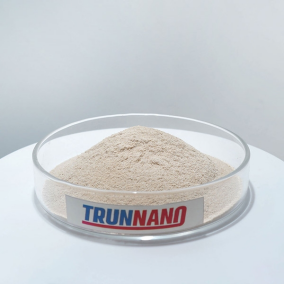
(Concrete Early Strength Agent)
Chemical Make-up and Classification of Very Early Toughness Agents
Early stamina agents can be generally classified right into not natural salts, organic substances, and composite kinds based on their chemical nature. Usual not natural ESAs consist of calcium chloride, sodium nitrite, and sodium sulfate, which promote quick hydration by lowering the induction duration of cement minerals. Organic ESAs, such as triethanolamine and formates, function by modifying the surface charge of cement particles and boosting nucleation sites. Compound ESAs combine numerous active ingredients to maximize early-age efficiency while lessening side effects like deterioration or postponed setup. Each type uses unique advantages relying on application demands, ecological problems, and compatibility with various other admixtures.
System of Action: Just How Very Early Toughness Agents Boost Concrete Efficiency
The fundamental mechanism of very early strength representatives depends on their capacity to accelerate the hydration responses of tricalcium silicate (C3S) and dicalcium silicate (C2S), the primary constituents in charge of concrete toughness advancement. By reducing the induction duration and enhancing the rate of calcium silicate hydrate (C-S-H) gel formation, ESAs allow earlier stiffening and hardening of the concrete paste. In addition, some agents minimize the freezing point of pore water, making them especially reliable in cold-weather concreting. Advanced solutions also boost microstructure densification, bring about boosted very early compressive toughness, decreased shrinkage, and improved resistance to ecological stressors.
Applications Across Building And Construction and Framework Sectors
Very early stamina agents are essential in a vast array of construction scenarios where quick stamina gain is important. In precast concrete production, they enable much shorter demolding cycles and enhanced manufacturing throughput. In winter season building and construction, ESAs prevent freeze damage by making it possible for very early frost resistance. Their use is likewise prevalent in emergency fixings, such as freeway patching and railway track piece restoration, where fast return-to-service times are important. Moreover, in high-performance concrete systems including additional cementitious products like fly ash or slag, ESAs compensate for slower early-age reactivity, making certain architectural preparedness without compromising lasting toughness.
Market Fads and Technical Developments
The marketplace for very early toughness representatives is broadening in reaction to growing demand for fast-track building and durable facilities. Technological developments have actually led to the development of non-chloride ESAs that prevent steel support deterioration, resolving one of the major constraints of traditional chloride-based representatives. Technologies such as nano-enhanced ESAs and smart release systems are being explored to improve dose efficiency and control hydration kinetics. Furthermore, digital assimilation– via real-time monitoring and predictive modeling– is boosting the accuracy of ESA applications in intricate design atmospheres. These trends mirror a wider change towards more secure, smarter, and extra sustainable building methods.
Environmental and Sturdiness Difficulties
In spite of their advantages, early strength agents encounter challenges pertaining to long-term durability and environmental effect. Chloride-containing ESAs, while economical, present threats of reinforcing steel rust if made use of poorly. Some organic ESAs may present volatile components or modify the setting actions unexpectedly. From an environmental point of view, there is increasing examination over the life-cycle influence of chemical admixtures, prompting research into eco-friendly and low-carbon options. Furthermore, incorrect dose or incompatibility with other additives can result in issues such as efflorescence, cracking, or decreased life span. Resolving these problems calls for mindful formulation style, rigorous testing, and adherence to progressing governing standards.
Future Overview: Towards Smart, Lasting, and High-Performance Solutions
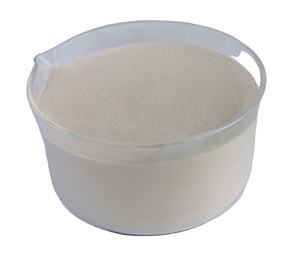
( Concrete Early Strength Agent)
Looking ahead, the evolution of early toughness representatives will certainly be driven by sustainability, performance optimization, and technical merging. Advancements in nanotechnology are enabling the development of ultra-fine, very reactive ESAs that enhance early strength without compromising later-age buildings. Eco-friendly chemistry approaches are promoting the creation of bio-based accelerators originated from renewable feedstocks, lining up with round economy objectives. Assimilation with smart construction modern technologies– such as IoT-enabled healing sensors and AI-driven admixture prediction designs– will even more fine-tune the use of ESAs in dynamic building settings. As climate durability and carbon reduction end up being main to framework planning, very early stamina agents will play a critical duty in shaping the next generation of high-performance, rapidly deployable concrete options.
Vendor
Cabr-Concrete is a supplier under TRUNNANO of Concrete Admixture with over 12 years of experience in nano-building energy conservation and nanotechnology development. It accepts payment via Credit Card, T/T, West Union and Paypal. TRUNNANO will ship the goods to customers overseas through FedEx, DHL, by air, or by sea. If you are looking for admixtures in concrete, please feel free to contact us and send an inquiry. (sales@cabr-concrete.com)
Tags: Concrete Early Strength Agent, concrete, concrete addtives
All articles and pictures are from the Internet. If there are any copyright issues, please contact us in time to delete.
Inquiry us