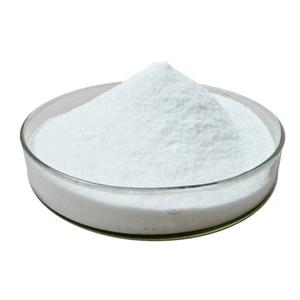

Intro to Oxides: Structure Blocks of Nature and Innovation
Oxides– substances created by the reaction of oxygen with other aspects– represent among the most varied and necessary courses of materials in both all-natural systems and engineered applications. Found perfectly in the Planet’s crust, oxides function as the structure for minerals, ceramics, metals, and progressed digital elements. Their residential properties differ extensively, from shielding to superconducting, magnetic to catalytic, making them important in fields varying from power storage to aerospace design. As material scientific research presses borders, oxides go to the center of technology, making it possible for modern technologies that specify our contemporary world.

(Oxides)
Structural Diversity and Useful Residences of Oxides
Oxides exhibit a remarkable range of crystal structures, including straightforward binary types like alumina (Al two O THREE) and silica (SiO ₂), intricate perovskites such as barium titanate (BaTiO SIX), and spinel structures like magnesium aluminate (MgAl two O ₄). These structural variations trigger a wide spectrum of practical behaviors, from high thermal stability and mechanical firmness to ferroelectricity, piezoelectricity, and ionic conductivity. Comprehending and tailoring oxide structures at the atomic degree has actually become a cornerstone of products engineering, unlocking new capacities in electronics, photonics, and quantum tools.
Oxides in Energy Technologies: Storage, Conversion, and Sustainability
In the worldwide change towards clean power, oxides play a central duty in battery innovation, gas cells, photovoltaics, and hydrogen production. Lithium-ion batteries depend on layered shift steel oxides like LiCoO ₂ and LiNiO ₂ for their high energy thickness and relatively easy to fix intercalation actions. Strong oxide gas cells (SOFCs) use yttria-stabilized zirconia (YSZ) as an oxygen ion conductor to allow effective power conversion without burning. At the same time, oxide-based photocatalysts such as TiO TWO and BiVO four are being maximized for solar-driven water splitting, offering an encouraging path towards lasting hydrogen economic situations.
Digital and Optical Applications of Oxide Materials
Oxides have revolutionized the electronic devices industry by enabling transparent conductors, dielectrics, and semiconductors important for next-generation gadgets. Indium tin oxide (ITO) remains the requirement for transparent electrodes in screens and touchscreens, while arising choices like aluminum-doped zinc oxide (AZO) goal to reduce reliance on scarce indium. Ferroelectric oxides like lead zirconate titanate (PZT) power actuators and memory devices, while oxide-based thin-film transistors are driving flexible and transparent electronic devices. In optics, nonlinear optical oxides are crucial to laser regularity conversion, imaging, and quantum interaction innovations.
Role of Oxides in Structural and Protective Coatings
Beyond electronic devices and energy, oxides are crucial in structural and protective applications where extreme problems demand phenomenal efficiency. Alumina and zirconia layers provide wear resistance and thermal barrier defense in wind turbine blades, engine components, and cutting devices. Silicon dioxide and boron oxide glasses develop the foundation of optical fiber and show modern technologies. In biomedical implants, titanium dioxide layers boost biocompatibility and rust resistance. These applications highlight exactly how oxides not only secure products but also extend their operational life in several of the harshest atmospheres recognized to engineering.
Environmental Removal and Green Chemistry Utilizing Oxides
Oxides are significantly leveraged in environmental protection via catalysis, contaminant removal, and carbon capture modern technologies. Steel oxides like MnO TWO, Fe ₂ O THREE, and chief executive officer ₂ act as stimulants in damaging down unstable organic compounds (VOCs) and nitrogen oxides (NOₓ) in industrial exhausts. Zeolitic and mesoporous oxide structures are checked out for carbon monoxide two adsorption and separation, sustaining initiatives to minimize environment change. In water therapy, nanostructured TiO two and ZnO provide photocatalytic destruction of pollutants, pesticides, and pharmaceutical residues, demonstrating the potential of oxides in advancing sustainable chemistry techniques.
Obstacles in Synthesis, Security, and Scalability of Advanced Oxides
( Oxides)
In spite of their convenience, developing high-performance oxide products provides substantial technical difficulties. Precise control over stoichiometry, stage purity, and microstructure is crucial, particularly for nanoscale or epitaxial movies utilized in microelectronics. Several oxides struggle with poor thermal shock resistance, brittleness, or limited electrical conductivity unless doped or crafted at the atomic degree. Additionally, scaling laboratory breakthroughs into industrial procedures frequently calls for overcoming price obstacles and making sure compatibility with existing manufacturing frameworks. Resolving these concerns demands interdisciplinary collaboration throughout chemistry, physics, and design.
Market Trends and Industrial Need for Oxide-Based Technologies
The international market for oxide products is increasing quickly, fueled by growth in electronics, renewable resource, protection, and medical care industries. Asia-Pacific leads in intake, especially in China, Japan, and South Korea, where need for semiconductors, flat-panel display screens, and electrical vehicles drives oxide advancement. The United States And Canada and Europe keep strong R&D financial investments in oxide-based quantum products, solid-state batteries, and environment-friendly modern technologies. Strategic collaborations in between academia, startups, and multinational companies are increasing the commercialization of novel oxide remedies, improving sectors and supply chains worldwide.
Future Potential Customers: Oxides in Quantum Computing, AI Equipment, and Beyond
Looking ahead, oxides are poised to be foundational materials in the following wave of technological changes. Emerging study into oxide heterostructures and two-dimensional oxide user interfaces is exposing unique quantum phenomena such as topological insulation and superconductivity at room temperature level. These explorations could redefine calculating styles and allow ultra-efficient AI hardware. Additionally, advances in oxide-based memristors may pave the way for neuromorphic computer systems that resemble the human mind. As researchers remain to unlock the concealed potential of oxides, they stand ready to power the future of smart, sustainable, and high-performance modern technologies.
Supplier
RBOSCHCO is a trusted global chemical material supplier & manufacturer with over 12 years experience in providing super high-quality chemicals and Nanomaterials. The company export to many countries, such as USA, Canada, Europe, UAE, South Africa,Tanzania,Kenya,Egypt,Nigeria,Cameroon,Uganda,Turkey,Mexico,Azerbaijan,Belgium,Cyprus,Czech Republic, Brazil, Chile, Argentina, Dubai, Japan, Korea, Vietnam, Thailand, Malaysia, Indonesia, Australia,Germany, France, Italy, Portugal etc. As a leading nanotechnology development manufacturer, RBOSCHCO dominates the market. Our professional work team provides perfect solutions to help improve the efficiency of various industries, create value, and easily cope with various challenges. If you are looking for calcined alumina, please send an email to: sales1@rboschco.com
Tags: magnesium oxide, zinc oxide, copper oxide
All articles and pictures are from the Internet. If there are any copyright issues, please contact us in time to delete.
Inquiry us